Overview
Wella Passionistas is an iOS community app built for Wella (Coty Inc.) to connect the brand directly with professional hairdressers. Rather than producing polished marketing content centrally, the platform turned stylists into content creators — giving them challenges, resources, and a community, while Wella aggregated the authentic salon-floor content they produced.
I was the sole frontend engineer on the project, owning all client-side features from initial build to launch, working alongside a backend engineer who handled the API and data layer.
The campaign won Content Strategy of the Year 2019 at the UK Content Awards.
The Challenge
Wella needed a way to cut through an increasingly noisy social landscape. Polished brand content wasn't resonating — but content made by real hairdressers, shot directly from the salon floor, was. The challenge was building a platform that could mobilise a community of stylists, give them creative prompts, and feed that content back into Wella's social channels at scale.
From an engineering standpoint, the challenge for me was different: I had built my foundation in React and was handed this project in Ionic — a framework I hadn't worked with before — with a production deadline.
What I Built
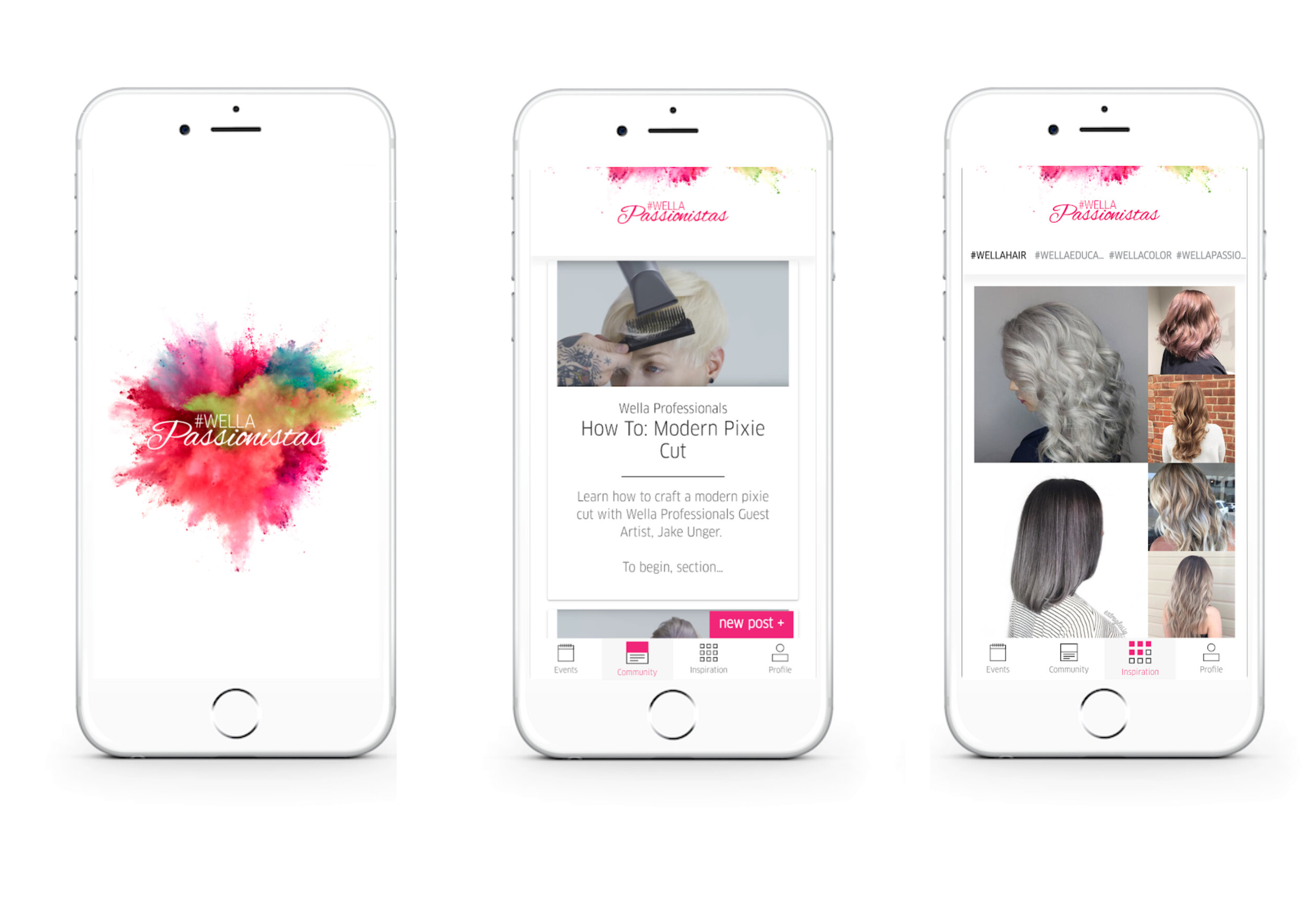
The app is a standalone Ionic application with its own backend, covering the full Passionistas experience:
- Home feed — surfacing the latest content challenges and community updates
- Content challenges — time-limited prompts encouraging hairdressers to create and share specific types of content
- Instagram integration — the content sharing flow routed through Instagram directly. Users would create their content, post it to their Instagram with a designated Wella hashtag, and the platform would surface and aggregate that content. This approach was deliberate — it met hairdressers on the platform they already used daily and produced content that was native to the feed, rather than a separate upload experience
- Educational resources — tips on producing engaging, format-native content
- Push notifications — challenge alerts and community updates, handled via Ionic native plugins
- User profiles and community — Passionista registration, profile management, and community membership
The Technical Reality
Coming to Ionic from React was a steep ramp. The component model, lifecycle hooks, and Angular's dependency injection were all meaningfully different from what I knew. I had to get productive quickly on a framework I hadn't used before, while delivering a full-featured production app.
In hindsight, this project fundamentally changed how I approach new technologies. The pressure of owning the entire frontend forced a depth of learning that a gradual introduction wouldn't have. Understanding Ionic's abstraction over Capacitor (then Cordova), how native plugins bridge into the WebView layer, and the constraints of building for a mobile WebView rather than a browser — these became a lasting part of how I think about frontend work across platforms.
The Instagram hashtag approach also required thinking beyond the immediate UI. The content aggregation happened server-side by monitoring the hashtag, which meant the app's job was to create the right incentive and context for hairdressers to post — a UX challenge as much as a technical one.
Impact
- 2,000+ pieces of content generated within months of launch, entirely without monetary incentive
- Passionista content grew to 13% of Wella's global social editorial
- Content from the programme achieved the highest engagement rates of any Wella owned social posts
- Each Passionista saw an average 25% growth in their own personal social channels
- UK Content Awards — Content Strategy of the Year 2019